The catalog
Self-paced courses authored by real facilitators — short lessons, honest practice, and certificates anyone can verify. Every course is free to start. Take them at the pace of your actual life.
First three lessons of every course are free. Karka Pass — 7 days ₹49 · 30 days ₹199 · 1 year ₹1,999, no autopay. See passes
359 courses on the shelves right now.
Speak with confidence
 Advanced
For people who can already hold a professional conversation and now need to move a room, defuse a fight they did not start, and be believed when the stakes are high. You finish with a high-stakes case you have delivered aloud and a written de-escalation plan for a real conflict.
 Core
CoreMost workplace writing fails for one reason: it is ordered the way the writer discovered things, not the way the reader needs them. This course fixes that, message type by message type, and you finish holding three rewritten pieces of your own writing and a one-page personal style sheet.
 Advanced
Ten fully written workplace scenarios, each with the messy human detail, a task you must produce, and a worked model response with commentary. This is where the rest of the communication shelf gets used.
 Core
CorePractical skills for multinational, multilingual and distributed teams. You will learn to treat culture as a hypothesis to test rather than a label to apply, and you will finish with a written working agreement for a real team.
 Core
CoreAn honest, sustainable approach to professional relationships that rejects the collect-contacts model. You map the network you already have, learn the few moves that matter, and leave with a relationship map and a written 90-day contact plan.
 Advanced
Master the art of storytelling to captivate audiences and deliver impactful presentations.
 Beginner
Your foundation for clear English — pronunciation, spelling, everyday grammar, powerful words and idioms, plus listening, speaking and writing practice. Start here, then move on to Grammar for Communicators.
 Core
CoreLearn to run a speaking-club meeting — every functionary role and every session format, with hands-on tools.
 Beginner
Go from "I can't speak English" to confident everyday conversation in 30 days — then step into the Pro Communicator course.
 Beginner
Learn English grammar the visual way — every part of speech, sentence building (S·V·O·C·A), articles, all 12 tenses, and a final fix-your-mistakes workshop. Picture-first and recognition-first, made for beginners.
 Beginner
Pro Communicator 1 — the club speaking track. Prepared speeches, table topics and evaluations that take you from nervous to natural.
Work with data
 Beginner
Learn to build spreadsheets other people can trust: references that survive being copied, the functions you will use every day, lookups that do not break, and a budget-and-variance tracker you keep at the end.
 Core
CoreLearn SQL by writing it. Twenty-one runnable labs take you from your first SELECT to a multi-table revenue query, using one small grocery database all the way through.
 Beginner
Learn, Analyze, Visualize, Automate, and Make Business Decisions — become a job-ready data analyst using Excel, SQL, Python, Power BI, and Generative AI.
Lead projects & teams
 Core
CoreLearn Scrum by doing: run a real sprint against an AI team, get PSM I exam-ready with verified practice, master Jira, and build a portfolio that gets you past the screen.
 Beginner
Run real projects with AI — from a vague idea to charter, WBS, schedule, budget, risk, KPIs and stakeholder updates. Tool-agnostic technique, with a multi-tool showcase for every task.
 Core
CoreA world-class, 2026-exam-aligned PMP prep program: understand project management deeply through stories, visuals, scenarios and real case studies — and pass the PMP on your first attempt.
Open shelves
 Advanced
Evaluate and harden AI agents: read failure traces, write deterministic checks over trace JSON, and defend against prompt injection — graded on the fix.
 Beginner
Prompt, structure and verify AI output like a professional — graded prompt labs, real workflows, honest limits. No coding needed, vendor-neutral.
 Core
CoreBuild, break, and evaluate real tool-using AI agents in your browser - graded on state, not prose. No API key, no setup, no affiliation.
 Core
CoreOpen the black box: build a toy BPE tokenizer, embeddings, a softmax sampler, a chunker, and a mini-RAG in your browser with Python and BM25 labs.
 Advanced
Design, run and debug supervisor/worker AI agent teams in your browser: handoffs, shared state, cost and failure modes, then ship a real pipeline.
 Core
CoreTurn prompting into engineering: define JSON-Schema tools, run a real agent loop, and build a spec-shaped in-memory MCP server in your browser.
Open shelves
Open shelves
 Beginner
CEFR A1 · Start here. The twenty-eight letters and how they connect, the short vowels you can't see, the throat sounds English doesn't have, and why the root system means Arabic vocabulary is decodable.
 Beginner
CEFR A1–A2 · The first fortnight. Greetings that come in pairs, numbers and bargaining, food and hospitality, getting around, and the courtesy formulas that carry Arabic conversation.
 Core
CoreCEFR A2 · Holding your end. The verb-first sentence, the nominal sentence with no verb at all, the definite article and iḍāfa, past and present, and the connectors that keep a conversation going.
 Core
CoreCEFR B1 · The engine room. The ten verb forms, broken plurals, the three cases and when they matter, the dual, and reading real Arabic news.
 Advanced
CEFR B1–B2 · Working in Arabic. Formal correspondence, the relationship-first business culture, meetings and indirect disagreement, and the register choice between MSA and dialect at work.
 Advanced
CEFR B2 · The top rung. Proverbs and the poetic tradition, the concepts Arabs use to explain themselves, humour, argument in a rhetorical culture, and a three-minute signature talk.
Open shelves
 Beginner
CEFR A1 · Start here. The Bengali script hanging from its headline, the inherent vowel that is 'o' and sometimes silent, the four-way consonant contrast, and the conjuncts that fuse letters together.
 Beginner
CEFR A1–A2 · The first fortnight. The three levels of 'you', kinship terms for strangers, numbers and bargaining, food and the feeding culture, transport, and the West Bengal / Bangladesh differences.
 Core
CoreCEFR A2 · Holding your end. Verb-final word order, conjugation across the three levels of 'you', the absence of grammatical gender, postpositions, and the connectors that keep a conversation going.
 Core
CoreCEFR B1 · The engine room. Sadhu bhasha versus cholito bhasha, compound verbs, participles and relative clauses, the conjunct inventory, and reading real Bengali.
 Advanced
CEFR B1–B2 · Working in Bengali. Formal correspondence, hierarchy and age, indirect disagreement, the code-switching reality of Kolkata and Dhaka offices, and the interview.
 Advanced
CEFR B2 · The top rung. Proverbs and the Tagore reflex, the concepts Bengalis use to explain themselves, humour, argument in a culture that argues for pleasure, and a three-minute signature talk.
Open shelves
 Beginner
A worked, self-contained preparation course for aptitude tests and interviews: quantitative, logical reasoning and verbal ability with the full working shown for every item, plus the interview room from the ninety-second self-introduction to the group discussion. You finish with a written preparation plan and a recorded self-introduction that you keep.
 Core
CoreFor people who execute well and now have to decide what is worth executing. You learn to diagnose a situation before prescribing, to name what you will not do, and to decide under real uncertainty — and you finish with a one-page strategy for a live situation of your own.
 Beginner
Awareness education on workplace conduct and anti-harassment for Indian workplaces. You learn to tell friendly from awkward from harassing by looking at impact rather than intent, to state a boundary in one sentence, to interrupt something you see, and to know how a concern is raised - and you finish with a team respect charter and a personal plan you keep. It is not legal advice and it does not discharge any employer's statutory obligations.
 Core
CoreValidate an idea, build the model, know your numbers, pitch an AI investor — and leave with a real launch plan.
 Core
CorePractise real discovery calls, objections and negotiations against AI buyers until closing feels natural.
Open shelves
 Core
CoreDesign parts that actually print on FDM machines - overhangs, walls, clearances, clean STLs, smart slicing, materials, and bureau-grade cost and time estimates - modelled in your own free CAD and verified in Karka with checkable numbers.
 Core
CoreLearn the parametric thinking behind every CAD tool — sketches, constraints, features, design intent and drawings — then prove it by modelling real parts in your own free CAD, verified by checkable mass-property numbers.
 Core
CoreProgram CNC toolpaths by hand and prove them in a browser G-code simulator — coordinates, work offsets, G/M-codes, arcs, feeds and speeds. First-angle (IS) throughout. A classroom, not a machine.
 Advanced
Turn the CAD/CAM ladder into a callback-ready portfolio: four dimensionally-verified parts, a complete first-angle drawing package, the NAPS/NATS + GrabCAD + CSWA funnel, GCC aptitude drills and AI mock interviews — honest routes only, no placement promises.
 Beginner
Learn to read, reason about and verify engineering drawings the Indian way — first-angle orthographic projection, isometric conversion, sections and IS SP 46 dimensioning — with 3D inspection labs and checkable-number modelling tasks.
 Advanced
Limits, fits and Geometric Dimensioning & Tolerancing done by hand: ISO 286 hole-basis fits, the 14 GD&T symbols, datum reference frames, true position with bonus tolerance, and worst-case vs statistical stack-ups — verified in Karka with checkable numbers.
Open shelves
 Beginner
CEFR A1 · Two systems to learn at once — pinyin tells you how a word sounds, characters tell you what it means, and neither predicts the other. Start with the four tones, because everything else depends on them.
 Beginner
CEFR A1–A2 · Thirty situations you will actually meet in China — where cash barely works, everything runs through one app, the numbers are counted in ten-thousands, and hospitality operates by rules you should know before someone pours your tea.
 Core
CoreCEFR A2 · The grammar is genuinely simple — no conjugation, no tenses, no plurals. What you need instead is measure words, the particle 了, and the question forms that don't reorder the sentence.
 Core
CoreCEFR B1 · The structures that let you say complicated things — 把, 被, 得, comparison, and the resultative endings — then reading real Chinese: news, a lease, a job posting, an official notice and a recipe.
 Advanced
CEFR B1–B2 · Chinese business runs on relationships, hierarchy and face — and on WeChat rather than email. Learn the register, the indirect refusals, the banquet, and how a decision actually gets made.
 Advanced
CEFR B2 · The top rung. Chengyu and the classical layer, the humour built on homophone and pun, argument for a room that weighs relationship alongside logic, and a three-minute signature talk.
Open shelves
 Beginner
The shell, from the beginning, for people who have always clicked. Forty-eight lessons and fourteen command drills covering paths, files, logs, grep, pipes, permissions, processes and a first shell script. The missing prerequisite for the Cloud academy.
 Core
CoreScenario-first prep for the AWS Certified Cloud Practitioner (CLF-C02) exam: four domains, a service-selection flashcard matrix, cost calculators, two timed mini-mocks, and a free hands-on graduation path. Prep, not the cert; not affiliated with AWS.
 Core
CoreLearn AWS by doing: write real IAM policies, build real CLI commands, and design graded architectures in your browser - all simulated, free, then graduate onto AWS's own free plan.
 Advanced
Train for SAA-C03 the way the exam actually asks: scenario-first quizzes across all four domains, design-the-answer architecture katas, real IAM policy labs graded by a deterministic evaluator, cost and capacity math, Well-Architected reviews, and two full-length timed mocks. Simulated and free - then we route you onto AWS's own free tier.
 Advanced
Design cloud architectures the way SAA-C03 and real interviewers probe them: build graded VPC / HA / scaling / decoupling katas in your browser, model costs in spreadsheets and Python, and run Well-Architected reviews. Simulated and free — then deploy for real on the AWS Free plan.
 Beginner
Provider-neutral cloud literacy for complete beginners: what the cloud physically is, how it is sold and priced, and how to choose AWS/Azure/GCP deliberately. No account, no cost, no promises — plus free no-card practice.
 Core
CoreWrite, reason about, and repair real AWS IAM policy JSON in your browser. A policy-lab-driven course on identity, least privilege, explicit-deny logic, conditions, S3 lockdown, network security, encryption and audit — simulated safely, free, and honestly (prep, not a certification).
 Advanced
Hands-on DevOps foundations — Linux, Docker, CI/CD, Infrastructure as Code and Kubernetes — with browser-simulated command drills, Python template validators, and a real-terminal Killercoda graduation. Prep and skill evidence, not an AWS certificate.
Open shelves
 Beginner
Understand how everyday work creates environmental impact, then make practical reductions in energy, waste and purchasing decisions.
 Beginner
Recognise bribery and corruption risk in everyday commercial work, test gifts and hospitality, and escalate third-party red flags early.
 Beginner
How the code of conduct applies to real decisions: conflicts of interest, gifts, confidentiality, respect at work, and how to raise a concern.
 Beginner
Practical security and privacy habits for everyday work: accounts, phishing, safe sharing, personal data, and fast incident reporting.
 Beginner
Move from good intentions to daily practice: inclusive meetings, fair people decisions, and clear options when you witness unfair treatment.
 Beginner
General workplace safety awareness: spot hazards, report incidents, follow emergency procedures, and know exactly where your role stops.
 Beginner
Everything a new joiner needs in the first 90 days: how the organisation works, how to get set up, and which obligations start on day one.
 Core
CoreMake remote and hybrid work deliberate: working agreements, asynchronous communication, equal-footing meetings, focus, wellbeing and security.
Open shelves
 Beginner
How to recognise a personal data breach early, contain it safely and report it internally within the hours that matter.
 Beginner
The working foundations of a data protection programme: the actors, the records, the lifecycle and the controls that make privacy operational.
 Advanced
Practitioner-level preparation for running a privacy programme: governance, assessments, breach leadership, regulator engagement and cross-border operating models.
 Core
CoreHandling data-subject requests end to end: intake, identity checks, search, exemptions, redaction and a defensible response within deadline.
 Core
CoreApplying privacy discipline to analytics and AI systems: training-data provenance, minimisation, inference risk, transparency and human oversight.
 Beginner
A plain-English grounding in what personal data is, why privacy rules exist, and how everyday work choices affect the people whose data you hold.
 Beginner
Handling employee, health and other sensitive personal data with the extra care that heightened categories and the employment relationship demand.
Open shelves
 Core
CoreThe harder half of facilitating: giving feedback that actually changes behaviour, asking questions that open people up, and staying steady when the room does not cooperate.
 Core
CoreEverything a new Elevana team member needs to know before they speak to their first member.
 Core
CoreHow to hold honest, useful conversations with members and prospective clients, from the first enquiry to the follow-up message.
 Core
CoreThe Elevana standard for running a session from the first minute to the last, so people practise more than they listen and leave with one clear next step.
Open shelves
 Core
CoreEvery CAT topic taught from first principles, a timed Sprint after every lesson, sectional tests, full mocks on the real CAT screen, and a capstone that turns your mock into a plan for 29 November.
 Core
CoreStudy every IBPS CSA Prelims and Mains topic, practise each one in a timed Sprint scored like the exam, then sit ten full mock tests under the real rules.
 Advanced
The NEET syllabus taught in the proportion the paper actually uses — biology first, then the chemistry and physics that move marks.
 Advanced
The other two subjects, taken as seriously as the maths — mechanics to modern physics, and chemistry you can reason about.
 Advanced
Discrete maths to compilers — the reasoning GATE rewards, then the question shapes, then the traps.
Open shelves
 Core
CoreCompany finance for the manager who has just been handed a budget or a monthly report and was never taught to read it. You learn the three statements, working capital, break-even, budgeting and the ratios worth knowing — and you finish holding a one-page budget you built and defended yourself.
 Beginner
Budgets, EMIs, SIPs, tax and retirement — learned in real spreadsheets and simulators, India-first. Education, not advice.
Open shelves
 Beginner
CEFR A1 · Finnish spelling is perfectly regular — one letter, one sound, no exceptions anywhere in the language. What takes work is that length is meaningful, vowels come in harmonising sets, and the stress never moves.
 Beginner
CEFR A1–A2 · Thirty situations you will actually meet in Finland — the sauna, the queue, the silence, the darkness, Kela, and a culture where small talk is not a courtesy but an intrusion.
 Core
CoreCEFR A2 · The jump from phrases to talk — the negative verb that conjugates, the -ko question ending, the past tense, and the enormous gap between the Finnish you learn and the Finnish people actually speak.
 Core
CoreCEFR B1 · The fifteen cases, consonant gradation, the partitive, and possessive suffixes — the four things Finnish is genuinely hard for, taught as systems rather than as lists. Then real Finnish text.
 Advanced
CEFR B1–B2 · Finland has arguably the flattest workplace hierarchy in the world — you call the CEO by their first name, you leave at four, and a meeting where nobody speaks for ten seconds is going well.
 Advanced
CEFR B2 · The top rung. Sisu properly explained, the expressions nobody teaches, Finland's genuinely excellent deadpan humour, argument built for a room that will not interrupt you, and a three-minute signature talk.
Open shelves
 Beginner
CEFR A1 · Learn to hear and pronounce French from absolute zero — the nasal vowels, the u/ou split, the silent endings and the liaison — and finish by reading a café menu and a station announcement aloud without guessing.
 Beginner
CEFR A1–A2 · Function in a French city this month. Thirty real situations — passport control, the boulangerie, the landlord, the pharmacy, the lost bag — each taught as hear-it, say-it, drill-it. Every phrase carries a pronunciation guide, so L1 is helpful but not required.
 Core
CoreCEFR A2 · Stop reciting phrases and start building your own French. Master the spoken verb system — present, past and the everyday future — then ask questions, disagree politely, give opinions and hold a real conversation without a script.
 Core
CoreCEFR B1 · Complete the grammar system — gender, agreement, the full tense set and the pronouns that shrink sentences — and turn it into real reading: forms, contracts, news headlines, work email and WhatsApp French.
 Advanced
CEFR B1–B2 · Take your French to work: the vouvoiement register, meetings and interruptions, email that reads as competent rather than translated, saying no without damage, and a French job interview — ending with an AI roleplay of a real working day.
 Advanced
CEFR B2 · The performance capstone of the French ladder: voice and presence, idioms and imagery, storytelling, humour, persuasion and impromptu speaking — ending with a recorded three-minute talk in French that you share for real feedback.
Open shelves
 Beginner
CEFR A1 · Québécois sounds nothing like the French you hear in Paris — and that is not an accent, it is an older, fuller vowel system plus one sound change that gives the whole thing away. Learn to hear it and produce it.
 Beginner
CEFR A1–A2 · Thirty situations you will actually meet in Quebec — the dépanneur, the SAQ, tipping, taxes added at the till, the winter that genuinely tries to kill you, and the language politics you should understand before you open your mouth.
 Core
CoreCEFR A2 · The jump from phrases to talk — the -tu question particle nobody teaches, the passé composé that does all the past-tense work, the compressed pronouns, and the fillers that hold a Quebec conversation together.
 Core
CoreCEFR B1 · Gender, agreement, pronoun order, the subjunctive and the imparfait/passé composé split — plus reading real Quebec text: a Radio-Canada report, a lease, a job posting, a government letter and a recipe.
 Advanced
CEFR B1–B2 · Quebec at work sits between France and North America and belongs to neither — flatter hierarchy, faster tutoiement, shorter emails, and French as the language of work by law rather than by custom.
 Advanced
CEFR B2 · The top rung. Expressions nobody teaches you, the sacres explained properly, Quebec humour and its self-deprecating tradition, argument built for a Quebec room, and a three-minute signature talk.
Open shelves
 Beginner
CEFR A1 · German spelling is more consistent than English — once you learn the rules, you can read any word aloud, including the famously long ones. Master the two ch sounds, the umlauts, final devoicing, and the trick that makes compound nouns readable.
 Beginner
CEFR A1–A2 · Thirty situations you will actually meet in Germany — the bakery, the Anmeldung, the Pfand machine, the pharmacy, the train, the neighbour complaining about noise. With the cultural rules that matter more than the vocabulary.
 Core
CoreCEFR A2 · The jump from phrases to talk. Verb-second word order, the prefixes that fly to the end of the sentence, the spoken past tense, and the modal verbs that carry half of everyday German.
 Core
CoreCEFR B1 · The four cases, the three genders, the adjective endings, and the subordinate clause that sends the verb to the very end. Everything L3 deliberately postponed — explained so it makes sense, then practised on real German text.
 Advanced
CEFR B1–B2 · German at work — where Sie persists for years, where directness is the courtesy, where Feierabend is protected, and where an email that opens 'Hi guys!' undoes you before the first sentence.
 Advanced
CEFR B2 · The top rung. Idioms nobody teaches you, the humour Germans are wrongly said not to have, argument built the way a German room expects, and a signature talk you could actually give.
Open shelves
 Master
CEFR B2 · Rhetoric was born in this language. The top rung: idioms of real speech, the storyteller's toolkit, and your own three-minute talk.
 Advanced
CEFR B1–B2 · The formal εσείς, the meeting, the email and the phone call — Greek that makes you employable, not just understood.
 Core
CoreCEFR B1 · Three genders, the case system made friendly, the aorist past — and the reading skills for signs, menus and headlines.
 Core
CoreCEFR A2 · The present tense, the verbs that carry every chat, and the small talk of the kafeneio — ending in a spoken capstone about your own life.
 Beginner
CEFR A1–A2 · Order at the taverna, buy at the laiki market, catch the right ferry — the Greek that carries you through a real day.
 Beginner
CEFR A1 · You already half-know this alphabet from maths and science — finish the job, master the five sounds English lacks, and read real Greek by the end.
Open shelves
 Beginner
CEFR A1 · Start here. Devanagari with the headline removed, the ળ Hindi lacks, three genders, the murmured voice, and a script built for merchants in a hurry.
 Beginner
CEFR A1–A2 · The first fortnight. The respect system, kinship terms, numbers and the trading culture, the thali and Gujarati food, dry-state realities, and the diaspora that reaches everywhere.
 Core
CoreCEFR A2 · Holding your end. Three-gender agreement, the ergative ne in the past, postpositions and the oblique, the tenses, and the connectors that keep a conversation going.
 Core
CoreCEFR B1 · The engine room. Compound verbs, participle chains, correlative relative clauses, causatives, the Sanskritised written register, and reading real Gujarati.
 Advanced
CEFR B1–B2 · Working in Gujarati. Formal correspondence, the family-business structure, relationship-first dealing, the diaspora networks, and the interview.
 Advanced
CEFR B2 · The top rung. Kahevato and the bhajan tradition, the concepts Gujaratis use, humour, argument in a commercially minded room, and a three-minute signature talk.
Open shelves
 Master
Level 10 (master) — where Hindi comes from and how its greatest writers used it: the Sanskrit and Perso-Arabic streams, Kabir, Rahim, Tulsidas, Premchand, and the modern poets.
 Advanced
Level 9 — the art of telling stories people remember: from the Panchatantra and the epics to personal, startup and inspirational stories.
 Advanced
Command a stage in Hindi — weddings, corporate events, award shows. Openings with a शेर, seamless transitions, crowd control, and graceful recovery when things go wrong.
 Advanced
Build airtight arguments, deliver rebuttals, survive cross-questioning and spot logical fallacies — parliamentary-style debate in Hindi.
 Advanced
Train the actor's voice and body in Hindi — breath, projection, the नवरस, monologues, improvisation and stage craft — and perform a full stage scene.
 Advanced
Craft and deliver an 18-minute conference-style idea talk in Hindi — एक विचार जो फैलने लायक़ है, an idea worth spreading. Find the idea, build the arc, rehearse like a professional, survive Q&A.
 Advanced
Elevana's Eight-Pillar PRO Communicator methodology, entirely in Hindi. Build every pillar — structure, clarity, voice, body language, storytelling, persuasion, leadership — and graduate by delivering a professional speech in Hindi.
 Core
CoreLevel 3 of the Hindi path. Business Hindi for meetings, interviews, email, negotiation, customer handling and sales — work comfortably in a Hindi-speaking organization.
 Core
CoreLevel 2 of the Hindi path. Command the tenses, expand your vocabulary, train your ear on real Hindi — and speak for 15 minutes without stopping.
 Beginner
Start from zero. Read Devanagari, build your first vocabulary, and hold a real 5-minute conversation in Hindi.
Open shelves
 Core
CoreImplementer training for a compliance management system: obligation registers, compliance risk, controls, culture and assurance.
 Beginner
Awareness of anti-bribery management: recognising bribery risk in ordinary business situations and knowing what to refuse and what to report.
 Beginner
Awareness of enterprise risk management: how risk is identified, assessed, treated and monitored, and how to contribute to it credibly.
 Core
CoreImplementer training for extending an information security management system into a privacy information management system covering personal data.
 Core
CoreImplementer-level training on building and running an information security management system, from scoping and risk treatment to audit readiness.
 Beginner
A plain-English awareness course on how a quality management system works and what it asks of you in your day-to-day work.
 Beginner
Awareness of business continuity management: what disruption planning covers, how recovery priorities are set, and your role when a plan is invoked.
 Beginner
Awareness of asset management: whole-life value, criticality, maintenance strategy and the asset decisions embedded in routine work.
 Beginner
Awareness of AI management systems: what responsible AI governance covers and what it asks of the people who build, buy or use AI systems.
 Core
CoreImplementer training for an IT service management system: service design, delivery, control processes and continual improvement.
 Beginner
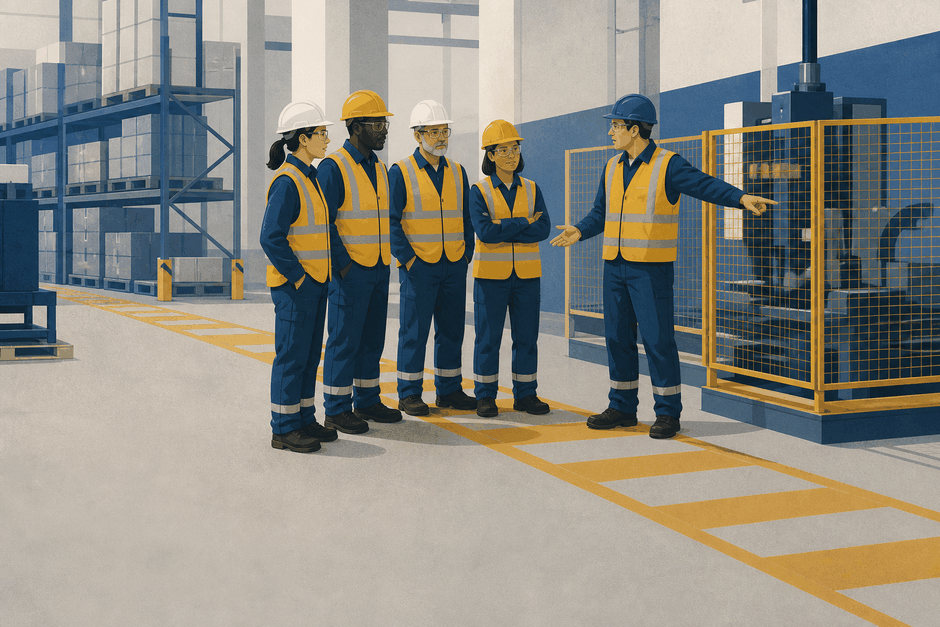
Awareness of occupational health and safety management: hazards, risk controls, worker participation and incident reporting.
 Beginner
Awareness of energy management systems: energy performance indicators, significant energy uses and the daily behaviours that move the numbers.
 Core
CoreA working-level grounding in information security management concepts for anyone who needs the vocabulary and the logic without implementing the system.
 Beginner
An awareness course on environmental management systems: aspects, impacts, legal duties and the environmental decisions built into ordinary work.
Open shelves
 Core
CoreSet service targets people recognise, report them honestly, and manage suppliers with evidence rather than goodwill.
 Core
CoreHandle contacts, requests and fulfilment on the service desk: triage, record, communicate and close with quality.
 Beginner
Understand where AI sits in IT service work, what must still be checked by a person, and what never goes into a prompt.
 Core
CoreDesign monitoring and event handling that detects real failure early without burying people in alerts.
 Core
CoreConnect strategy to delivery: portfolio decisions, business cases, risk and control, and the evidence assurance asks for.
 Beginner
A plain-English introduction to how IT services are planned, delivered and improved, and where your own work sits in that flow.
 Core
CoreRun incidents end to end and hold a major incident together: prioritise, coordinate, communicate and review.
 Core
CorePlan and sequence a transformation that changes how work flows, not just which technology sits underneath it.
 Core
CoreMap how work really flows, find where it waits, and run small improvement experiments that stick.
 Core
CoreAssess, document, authorise and review changes so delivery stays fast without gambling with live services.
 Beginner
Keep configuration and asset records true: what to record, when to update it, and how to verify it against reality.
 Core
CorePlan releases and deployments that can be verified, supported and reversed, from environment promotion to early-life support.
 Core
CoreInvestigate recurring failure: raise problems worth solving, analyse causes and publish workarounds people can use.
Open shelves
 Master
CEFR B2 · The top rung: idioms nobody teaches you, the narrator's toolkit, and a three-minute talk delivered with Italian hands and Italian heart.
 Advanced
CEFR B1–B2 · Lei vs tu, the meeting, the email and the phone call — the Italian that makes you employable, not just understood.
 Core
CoreCEFR B1 · The article system, the passato prossimo, and the reading skills to handle menus, signs and headlines without a dictionary.
 Core
CoreCEFR A2 · The present tense, the twelve verbs that carry every conversation, and the small talk that turns strangers into friends.
 Beginner
CEFR A1–A2 · Order at the bar, buy at the market, catch the right train — the Italian that gets you through a real day, phrase by phrase.
 Beginner
CEFR A1 · Italian is pronounced exactly as it is written — learn the seven vowels, the two faces of C and G, and read anything aloud by the end.
Open shelves
 Beginner
CEFR A1 · Japanese uses three writing systems at once, and the sound system is easier than any of them. Learn hiragana and katakana properly, understand what kanji actually are, and get the timing right.
 Beginner
CEFR A1–A2 · Thirty situations you will actually meet in Japan — where cash still matters, tipping is refused, silence on the train is enforced socially, and the rubbish has to be sorted into a schedule.
 Core
CoreCEFR A2 · The verb goes last, the particles carry the grammar, and the て-form unlocks half the language. Plus the past tense, negatives, and the two kinds of adjective.
 Core
CoreCEFR B1 · Keigo explained as a system rather than a list, plus counters, transitive pairs, conditionals and relative clauses — then reading real Japanese: news, a lease, a job posting, a notice and a recipe.
 Advanced
CEFR B1–B2 · The Japanese office runs on hourensou, nemawashi and a great deal of apologising — plus a business email register with fixed formulas you can learn wholesale.
 Advanced
CEFR B2 · The top rung. Yojijukugo and proverbs, the concepts Japanese uses to explain itself, humour built on wordplay and timing, argument for a room that values harmony, and a three-minute signature talk.
Open shelves
 Beginner
CEFR A1 · Learn to read and write all 49 Kannada aksharas from absolute zero — trace every letter, hear every sound, and finish by reading real Bengaluru signboards, bus boards and menus.
 Beginner
CEFR A1–A2 · Function in Bengaluru THIS month: 30 real situations — auto, market, landlord, pharmacy, office — taught through hear-it / say-it / drill-it micro-sets across each module. Script optional: every phrase carries romanization.
 Core
CoreCEFR A2 · Stop memorising phrases and start building your own Kannada sentences. Master the spoken verb system (present, past, and the everyday future), ask and answer questions, negate correctly, handle small talk and phone calls — all in natural Bengaluru Kannada, with script + romanization + English for every line.
 Core
CoreCEFR B1 · Complete the Kannada grammar system — cases, verb morphology and sandhi — and turn it into real reading fluency: signboards, menus, news headlines and WhatsApp messages in the script, plus typing Kannada on your own phone.
 Advanced
CEFR B1–B2 · Take your Kannada to work: meetings, customers, polite requests and refusals, professional messages and email, and a spoken status update — in the formal register Bengaluru workplaces actually use.
 Advanced
CEFR B2 · The performance capstone of the Kannada ladder: storytelling, proverbs, humour, debate, anchoring and impromptu speaking — ending with a recorded three-minute talk you share for real feedback.
Open shelves
 Beginner
CEFR A1 · Hangul was designed in 1443 to be learnable by anyone in a morning, and it still is. Learn the alphabet, then the three-way consonant distinction and the final-consonant rules that the alphabet doesn't show you.
 Beginner
CEFR A1–A2 · Thirty situations you will actually meet in Korea — and the speech levels, age hierarchy and table manners that decide whether the words you know come out right.
 Core
CoreCEFR A2 · The verb goes last, the particles carry the grammar, and the pronouns mostly disappear. Plus the past tense, negation, and how to keep a Korean conversation going.
 Core
CoreCEFR B1 · The honorific system properly explained, the counter words, verb connectives, and Sino-Korean vocabulary — then reading real Korean: news, a lease, a job posting, a government notice and a recipe.
 Advanced
CEFR B1–B2 · Korean offices run on titles rather than names, on seniority that outranks age, and on saying difficult things indirectly — plus a work culture that has changed genuinely and rapidly since 2018.
 Advanced
CEFR B2 · The top rung. 정 and 한 explained properly, the idioms nobody teaches, Korean humour and wordplay, argument built for a room that weighs relationship alongside logic, and a three-minute signature talk.
Open shelves
 Core
CoreA practical course on getting a change adopted rather than merely announced. You diagnose readiness, map who loses what, write a case that survives being repeated, plan the pilot and the pace, and leave with a complete change plan including what you will stop doing.
 Core
CoreA specialist course on giving feedback that is heard, receiving it without flinching, and coaching by asking rather than telling. You will script, rehearse and record two conversations on your own, hold them for real if and when you can, and keep a written record of both.
 Core
CoreA course for the person who decides, not the person who applies. You learn to define a role, design a structured interview, ask questions that produce evidence, score before you argue, and close honestly — and you leave holding a complete interview kit for one real role.
 Core
CoreA course about the person doing the leading, not the process. You collect evidence on how you actually land, widen your style, practise emotional intelligence in parts, and leave with a leadership self-portrait and a dated development plan.
 Core
CoreLearn leadership by doing it: AI roleplays for feedback, conflict and decisions, plus the planners real managers use daily.
Open shelves
 Beginner
CEFR A1 · Start here. Regular spelling, six vowels including the schwa that isn't written, no tone, no gender, no verb conjugation — and the affix system that builds the vocabulary.
 Beginner
CEFR A1–A2 · The first fortnight. Politeness and the pronoun problem, numbers and bargaining, food and the mamak stall, transport, and navigating a genuinely multicultural society.
 Core
CoreCEFR A2 · Holding your end. Time without tense, the me- and ber- prefixes, word order and the head-first rule, negation with tidak and bukan, and the connectors that keep a conversation going.
 Core
CoreCEFR B1 · The engine room. The full affix system, the two passives, relative clauses with yang, formal register, and reading real Malay.
 Advanced
CEFR B1–B2 · Working in Malay. Formal correspondence, titles and their real weight, indirect communication and face, meetings, and the reality of an office that runs in two languages.
 Advanced
CEFR B2 · The top rung. Peribahasa and the pantun tradition, the concepts Malaysians use to explain themselves, humour, argument in a face-conscious culture, and a three-minute signature talk.
Open shelves
 Beginner
CEFR A1 · Start here. The roundest script in India, the largest consonant inventory of any Indian language, the sound no other language has, and words that grow to sentence length.
 Beginner
CEFR A1–A2 · The first fortnight. Three levels of 'you', the chettan/chechi system, numbers and prices, the sadya and Kerala food, transport, and a society with unusual literacy and unusual politics.
 Core
CoreCEFR A2 · Holding your end. Verb-final order, the case suffixes, tense without person, the ആണ് copula, negation, and the connectors that keep a conversation going.
 Core
CoreCEFR B1 · The engine room. Relative participles instead of relative clauses, the conditional and concessive suffixes, causatives, the Sanskritised written register, and reading real Malayalam.
 Advanced
CEFR B1–B2 · Working in Malayalam. Formal correspondence, the flat-ish hierarchy that Kerala's politics produced, disagreement that is franker than most of India, code-switching, and the interview.
 Advanced
CEFR B2 · The top rung. Proverbs and the cinema reflex, the concepts Malayalis use to explain themselves, humour built on irony and satire, argument in an unusually argumentative culture, and a three-minute signature talk.
Open shelves
 Beginner
CEFR A1 · Start here. Devanagari as Marathi uses it, the ḷ and the two ch/j sounds Hindi lost, the schwa that drops, and the three genders that shape every sentence.
 Beginner
CEFR A1–A2 · The first fortnight. The respect system, kinship terms for strangers, numbers and prices, Maharashtrian food, Mumbai versus Pune, and why speaking Marathi in Mumbai lands differently than you'd expect.
 Core
CoreCEFR A2 · Holding your end. Three-gender agreement, the ergative ne in the past, postpositions and the oblique, the tenses, and the connectors that keep a conversation going.
 Core
CoreCEFR B1 · The engine room. Compound verbs, participle chains, the correlative relative clauses, causatives, the Sanskritised written register, and reading real Marathi.
 Advanced
CEFR B1–B2 · Working in Marathi. Formal correspondence, where Marathi actually carries weight at work, the Mumbai-Pune split, respect and hierarchy, and the interview.
 Advanced
CEFR B2 · The top rung. Mhaṇī and the abhang tradition, the concepts Maharashtrians use, humour built on wordplay and theatre, argument in a direct culture, and a three-minute signature talk.
Open shelves
Open shelves
 Beginner
Rebuild arithmetic from place value to lightning mental math — the foundation every Indian exam silently assumes.
 Beginner
Percentages, ratio, interest and speed-time — the arithmetic of salaries, loans and every quant paper.
 Core
CoreClass 8-10 maths made interactive — equations, mensuration and probability with instant checking.
 Core
CoreThe complete Bank-PO/SSC/Railways/CAT quant syllabus with speed strategy and live full-length mocks — free, on your phone.
 Advanced
The six highest-weight units of JEE Main maths — exam-exact numerical drills with negative-marking discipline.
 Advanced
JEE-Advanced-grade multi-concept problems and rigorous calculus — where formulas end and thinking begins.
 Advanced
Number theory, combinatorics and proof craft — from IOQM integer answers to INMO-style arguments.
 Advanced
The ~28 marks nearly every GATE paper shares — Engineering Maths and General Aptitude, mastered in one free course.
 Core
CoreHigh-school maths under time pressure — reach GRE Q165+, GMAT-competitive quant, or SAT 750+ without coaching.
Open shelves
 Beginner
How permit-to-work systems control high-risk jobs: raising, authorising, holding, suspending and closing a permit, and the isolations beneath them.
 Core
CoreAwareness of fall risk: hazard recognition, edge protection, access equipment, fall-arrest principles, dropped objects and rescue planning.
 Beginner
How to run and record a structured hazard identification and risk assessment, from task breakdown to control verification and residual risk.
 Beginner
Site-wide grounding in mining hazards, the hierarchy of control, and the reporting and stop-work duties every person on site carries.
 Beginner
How fatigue builds across rosters and shift work, how it degrades judgement, and the practical controls individuals and crews can use.
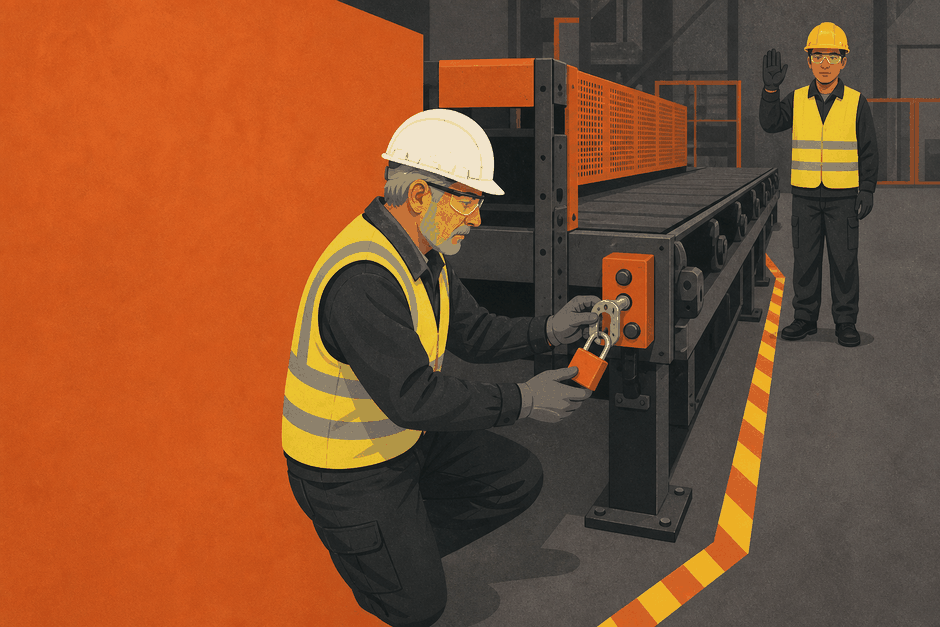 Core
CoreSafe interaction with mobile and fixed plant: pre-start checks, exclusion zones, guarding, maintenance isolation and defect reporting.
 Beginner
Environmental controls for dust, noise, water and waste, plus spill prevention, containment and the reporting duties that follow an incident.
 Beginner
Site emergency response for the whole workforce: raising the alarm, evacuation, refuge, first-response limits and how rescue teams operate.
 Core
CoreAwareness of confined space risk: recognising the space, atmospheric hazards, entry permit controls, and the standby and rescue arrangements.
Open shelves
 Beginner
CEFR A1 · Start here. The roundest script in India after Malayalam, a classical language older than most of its neighbours, the inherent o, and a grammar with no gender at all.
 Beginner
CEFR A1–A2 · The first fortnight. Three levels of 'you', kinship terms, numbers and prices, Odia food and the Jagannath temple's kitchen, transport, and a state that most visitors know nothing about.
 Core
CoreCEFR A2 · Holding your end. Verb-final order, conjugation for person and respect but not gender, the case suffixes, the two 'to be' verbs, negation, and the connectors that keep a conversation going.
 Core
CoreCEFR B1 · The engine room. The classical inheritance, the Sanskritised register, causatives, the conjunct inventory, palm-leaf orthography, and reading real Odia.
 Advanced
CEFR B1–B2 · Working in Odia. Formal correspondence, where Odia carries weight, the mining-and-industry economy, hierarchy, indirect refusal, and the interview.
 Advanced
CEFR B2 · The top rung. Dhaga and the bhakti tradition, the concepts Odias use, humour, argument in a courteous room, and a three-minute signature talk.
Open shelves
 Core
CoreDesign how a platform team works: interaction modes, intake, support rotas, decision records, and a sustainable balance of roadmap, support and toil.
 Core
CoreDesign golden paths and self-service flows that let a team ship safely without filing a ticket, with guard rails instead of gates and honest escape hatches.
 Beginner
Secure the platform itself: threat modelling, least-privilege identity, secrets lifecycle, policy as code, supply chain integrity and audit-ready evidence.
 Core
CoreChoose, collect and report platform measures that resist gaming: delivery and reliability signals, real adoption, unit cost and honest executive reporting.
 Beginner
A plain-English introduction to what an internal platform is, the problems it exists to reduce, and how platform and product teams share the work.
 Core
CoreRun the internal platform as a product: know your users, evidence your roadmap, publish contracts, and make the platform's value visible without overclaiming.
 Core
CoreThe operating practice of monitoring digital services: service level objectives, symptom-based alerting, humane on-call, incident response and blameless review.
 Core
CoreInstrument systems properly: choose the right metric types, structure logs, propagate trace context, and control telemetry cost without going blind.
 Core
CoreCloud-native and Kubernetes foundations: cluster architecture, workloads, networking, configuration, access control and a repeatable troubleshooting routine.
 Core
CoreDesign an internal developer platform end to end: application modelling, provisioning, interfaces, tenancy and safe evolution across many teams.
 Core
CoreDefine, review, test and operate infrastructure as code: module design, state and secrets, change pipelines, testing strategy and drift at estate scale.
 Core
CoreApply GitOps properly: declarative state in version control, pull-based reconciliation, repository design, secrets handling and rollback at scale.
 Core
CoreMeasure and improve developer experience: research that gets honest answers, inner and outer loop friction, humane interfaces and a credible improvement programme.
 Core
CoreBuild a developer portal and service catalogue people trust: a sound entity model, self-maintaining data, templates, docs-as-code and fair scorecards.
 Core
CoreBuild delivery pipelines that stay fast and trustworthy: trunk health, pipelines as code, proportionate testing, artefact promotion and safe deployment.
Open shelves
 Beginner
CEFR A1 · Start here. The consonant clusters that look impossible and aren't, the two rows of hissing sounds, the nasal vowels, and the fixed stress that makes Polish easy to say once you can read it.
 Beginner
CEFR A1–A2 · The first fortnight. Pan and pani and why Polish addresses you in the third person, numbers and money, food and the milk bar, transport, and the courtesies that matter.
 Core
CoreCEFR A2 · Holding your end. Verb conjugation, the accusative and instrumental in real use, gendered past tense, verb aspect, and the connectors that keep a conversation going.
 Core
CoreCEFR B1 · The engine room. All seven cases, the gender system including the masculine-personal plural, verbs of motion, and reading real Polish.
 Advanced
CEFR B1–B2 · Working in Polish. Formal correspondence and its conventions, meetings and disagreement, titles at work, and the directness that surprises people who expected Central European formality.
 Advanced
CEFR B2 · The top rung. Proverbs and set expressions, the concepts Poles use to explain themselves, humour built on irony and absurdity, argument for a room that expects you to defend your position, and a three-minute signature talk.
Open shelves
 Beginner
CEFR A1 · Brazilian Portuguese sounds nothing like it looks to a Spanish-trained eye. Learn the five nasal vowels, the R that is really an H, the open/closed vowel split, and the palatalisation that turns 'de' into 'jee' — then read any Portuguese word aloud correctly.
 Beginner
CEFR A1–A2 · Function in a Brazilian city this month. Thirty real situations — the airport, the padaria, the landlord, the farmácia, the lost bag — each taught as hear-it, say-it, drill-it, with the replies you'll actually get back.
 Core
CoreCEFR A2 · Stop reciting phrases and start building your own Portuguese. Master the present tense, settle ser versus estar, handle both past tenses, and learn why 'gostar de' works normally where Spanish 'gustar' is backwards — then hold a real unscripted conversation.
 Core
CoreCEFR B1 · Complete the grammar system — the contraction machine, the personal infinitive that no other Romance language has, the future subjunctive Portuguese uses constantly, and the pronoun rules Brazilians actually follow — then turn it into real reading.
 Advanced
CEFR B1–B2 · Take your Portuguese to work in Brazil: the warmth that isn't optional, meetings that open socially, email formulas, the indirect refusal that means no, and a Brazilian job interview — ending with an AI roleplay of a real working day.
 Advanced
CEFR B2 · The performance capstone of the Portuguese ladder: voice and presence, the expressions that make speech vivid, storytelling, Brazilian humour, persuasion and impromptu speaking — ending with a recorded three-minute talk you share for real feedback.
Open shelves
 Core
CoreBuild and deliver a presentation around one clear message, with slides that support the point and answers that hold up.
 Core
CoreRun the work, the team and the system: planning, performance, budgets, risk and change for people who manage other people.
 Beginner
Awareness-level foundations of workplace communication: listening properly, being clear, and dealing with friction early.
 Core
CoreTake deliberate charge of your own development: map options, build evidence, and prepare for career conversations and interviews.
 Core
CoreBuild trustworthy spreadsheet analysis and one-screen dashboards, from messy source data to a report you can defend.
 Beginner
Recognise bribery, conflicts of interest and related conduct risks in everyday work, and know how to declare, refuse and speak up.
 Core
CoreUnderstand environmental, social and governance issues in operational terms, and plan engagement that listens and closes the loop.
 Core
CoreWrite emails people act on and reports people can navigate, using clear structure, honest evidence and plain English.
 Core
CoreHold coaching conversations and give feedback that describes behaviour and impact, so people leave with something they can act on.
 Core
CorePlan, structure and deliver everyday workplace messages so the point lands first and the reader knows what to do next.
 Core
CoreDecide what matters, plan a realistic week, and protect focus so important work gets done alongside the urgent.
 Core
CoreThe practical basics of a first supervisory role: setting expectations, running check-ins, handling problems and knowing your limits.
 Beginner
Awareness-level guidance on generative AI at work: what it can do, where it fails, and what you must never paste into it.
Open shelves
 Beginner
CEFR A1 · Start here. Gurmukhi in the order it was designed, the tones that make Punjabi unique among Indo-Aryan languages, the four-way consonant contrast, and the Shahmukhi script used in Pakistan.
 Beginner
CEFR A1–A2 · The first fortnight. The respect particle ji, kinship terms for strangers, numbers and bargaining, food and the langar tradition, transport, and hospitality that doesn't take no for an answer.
 Core
CoreCEFR A2 · Holding your end. Verb-final order, gender agreement everywhere, the ergative ne in the past, postpositions, and the connectors that keep a conversation going.
 Core
CoreCEFR B1 · The engine room. Compound verbs, the participle chains that replace subordinate clauses, causatives, the dialect map, and reading real Punjabi.
 Advanced
CEFR B1–B2 · Working in Punjabi. Formal correspondence, respect and age, the agricultural and diaspora economies, code-switching with English and Hindi, and the interview.
 Advanced
CEFR B2 · The top rung. Akhaan and the poetic tradition, the concepts Punjabis use to explain themselves, humour, argument in a warm and direct culture, and a three-minute signature talk.
Open shelves
 Beginner
Seven short texts, one a day, with a question for each.
 Core
CoreEight short lessons on managing yourself before you manage anyone else.
 Beginner
A short course on the patience of growing into yourself.
Open shelves
 Beginner
CEFR A1 · Cyrillic takes about a week, and half of it you already know. The real work is stress — which moves unpredictably and changes how every vowel is pronounced.
 Beginner
CEFR A1–A2 · Thirty situations you will actually meet — where the unsmiling stranger is being polite, not hostile, and where a direct answer is a form of respect.
 Core
CoreCEFR A2 · Verb aspect is the thing Russian does that European languages don't — every verb comes in a pair, and choosing wrongly changes what you said. Plus the present, past and the first two cases.
 Core
CoreCEFR B1 · Six cases, three genders and the verbs of motion — the parts of Russian that genuinely take work, taught as systems. Then reading real Russian.
 Advanced
CEFR B1–B2 · Russian offices are hierarchical, direct and formal in writing — a combination that surprises people expecting one or the other. Plus the patronymic, the vertical, and how a decision actually gets made.
 Advanced
CEFR B2 · The top rung. Proverbs and the literary reflex, the concepts Russians use to explain themselves, humour built on irony and absurdity, argument for a room that expects you to defend your position, and a three-minute signature talk.
Open shelves
 Beginner
CEFR A1 · Start here. The most rounded script in South Asia, the prenasalised consonants nobody else has, and the widest spoken-written gap of any language in this ladder.
 Beginner
CEFR A1–A2 · The first fortnight. The pronoun problem, kinship terms, numbers and prices, Sri Lankan food and its heat, transport, and a country with a recent history worth understanding.
 Core
CoreCEFR A2 · Holding your end. Spoken Sinhala's uninflected verbs, the focus construction that has no English equivalent, the case suffixes, the two 'to be' verbs, and the connectors that keep a conversation going.
 Core
CoreCEFR B1 · The engine room. Written Sinhala's conjugation, the Pali and Sanskrit layers, the literary tradition, and reading real Sinhala without learning to speak it wrong.
 Advanced
CEFR B1–B2 · Working in Sinhala. Formal correspondence in the written register, the English-dominant private sector, hierarchy, indirect refusal, and the interview.
 Advanced
CEFR B2 · The top rung. Prastāva piruḷu and the poetic tradition, the concepts Sri Lankans use, humour, argument in a courteous room, and a three-minute signature talk.
Open shelves
 Beginner
A plain-English orientation to what a SOC 2 report is, who issues it, and how an organisation works towards one.
 Beginner
What SOC 2 asks of everyday work, and the security habits every member of staff is expected to keep.
 Beginner
Recognise a security event, report it quickly and accurately, and preserve what the responders will need.
 Beginner
Handle personal and confidential information with care: purpose, minimisation, rights and the promises we made.
 Core
CoreSpot social engineering across email, phone, chat and in person, verify before acting, and report it the right way.
 Beginner
Decide what information is worth protecting, label it correctly, and move it without leaving copies behind.
 Beginner
Hold, protect and prove your identity at work: strong credentials, phishing-resistant factors and safe recovery.
Open shelves
 Core
CoreRead the Earth from space — the space skill India actually hires for. Real Sentinel-2 scenes, NDVI in Python, a job-ready portfolio.
 Beginner
How rockets really reach orbit — fly the physics yourself in your browser, from the rocket equation to Gaganyaan.
 Advanced
Kepler to real TLEs: predict satellite passes and design orbits — computed by you, in your browser.
 Beginner
Learn the sky above your city — moon, planets, stars — and compute tonight's sky yourself in Python.
 Core
CoreMock-driven prep for every ISRO entry route — Scientist SC, Technical Assistant and Technician — with the eligibility truth up front.
 Beginner
The biggest questions — expansion, black holes, dark matter — with the numbers in your own hands.
 Core
CoreReal olympiad-grade problems and timed mocks for school astronomy champions — positional astronomy to celestial mechanics.
 Beginner
Habitable zones, biosignatures and the Drake equation — computed, not just contemplated.
Open shelves
 Beginner
CEFR A1 · Spanish spelling is almost perfectly phonetic — learn the rules once and you can read any Spanish word aloud correctly, forever. Master the five pure vowels, the rolled rr, the ñ, and the stress rules that decide where every word lands.
 Beginner
CEFR A1–A2 · Function in a Spanish-speaking city this month. Thirty real situations — the airport, the panadería, the landlord, the farmacia, the lost bag — each taught as hear-it, say-it, drill-it, with the replies you'll actually get back.
 Core
CoreCEFR A2 · Stop reciting phrases and start building your own Spanish. Master the present tense, settle ser versus estar for good, handle both past tenses, and use 'gustar' the way Spanish actually works — then hold a real unscripted conversation.
 Core
CoreCEFR B1 · Complete the grammar system — gender, agreement, por versus para, the pronouns that shrink sentences, and an honest first look at the subjunctive — then turn it all into real reading: forms, contracts, news headlines and WhatsApp Spanish.
 Advanced
CEFR B1–B2 · Take your Spanish to work: the usted register and where it actually applies, meetings and interruptions, email that reads as competent rather than translated, saying no without damage, and a Spanish job interview — ending with an AI roleplay of a real working day.
 Advanced
CEFR B2 · The performance capstone of the Spanish ladder: voice and presence, refranes and imagery, storytelling, humour, persuasion and impromptu speaking — ending with a recorded three-minute talk in Spanish that you share for real feedback.
Open shelves
 Beginner
CEFR A1 · Start here. Five clean vowels, spelling that never lies, stress that never moves, and the noun-class system that shapes the whole language — introduced gently.
 Beginner
CEFR A1–A2 · The first fortnight. The greeting ritual and why it takes so long, respect for elders, numbers and bargaining, food, transport, and the courtesies that carry East African life.
 Core
CoreCEFR A2 · Holding your end. The verb as a whole sentence, the tense markers, the noun classes in real use, agreement, and the connectors that keep a conversation going.
 Core
CoreCEFR B1 · The engine room. The verb extensions that build new verbs, relative clauses inside the verb, the remaining noun classes, the -a of association, and reading real Swahili.
 Advanced
CEFR B1–B2 · Working in Swahili. Formal correspondence, respect for hierarchy and age, meetings and indirect disagreement, and the reality of a language that shares the office with English.
 Advanced
CEFR B2 · The top rung. Methali and the proverb tradition, the concepts East Africans use to explain themselves, humour, argument in a consensus culture, and a three-minute signature talk.
Open shelves
 Beginner
CEFR A1 · Read and write the Tamil script from absolute zero — all 12 vowels, 18 consonants, the 216 syllables they build, numerals, and real Chennai signboards — with on-screen tracing, sound drills and honest guidance.
 Beginner
CEFR A1–A2 · Get things done in Chennai this month. Spoken-first Tamil for autos, markets, food, PGs, doctors and daily life — every phrase in Tamil script, romanization and English, with listening, speaking and drill practice.
 Core
CoreCEFR A2 · Move from fixed survival phrases to building your own sentences — spoken tense, questions, negation, small talk and the phone, in natural Chennai-register Tamil.
 Core
CoreCEFR B1 · Master the Tamil case system, sandhi and verb morphology, learn the spoken-vs-written divide honestly, and read real signboards, menus and news — spoken-first, script when you need it.
 Advanced
CEFR B1–B2 · Speak, handle customers and write professional Tamil at work — meetings, service scripts, polite requests and refusals, WhatsApp and formal email, plus honest coaching on the spoken-vs-written register split.
 Advanced
CEFR B2 · The Tamil ladder's performance capstone — storytelling, proverbs (paḻamoḻi) and the Kural, persuasion, event anchoring and impromptu speaking, finishing with a recorded stage piece. Spoken-first, formal when the stage needs it.
Open shelves
 Core
CoreReact, Node.js, Angular, ASP.NET Core and PostgreSQL — one coherent programme that takes a beginner to a junior full-stack developer's standard of work.
 Beginner
Learn to program from nothing, in Python, through 20 code labs that run in your browser. You finish with a working script that turns a sales file into a plain-text report.
 Core
CoreFrom phishing and passwords to real SQL log-hunting labs and incident response — security you can actually practise.
Open shelves
 Beginner
CEFR A1 · Learn to read and write the full Telugu aksharamāla from absolute zero — trace every letter, hear every sound, and finish by reading real Hyderabad signboards, bus boards and menus.
 Beginner
CEFR A1–A2 · Function in Hyderabad from your first week: autos, markets, food, your PG, the pharmacy and the office — natural spoken Telugu with romanization for every phrase, so you never wait for the script.
 Core
CoreCEFR A2 · Turn your survival phrases into real conversations. Master the Telugu verb engine — present, past and future — then questions, negation, small talk and the telephone. Heavy on building sentences yourself, tap by tap, so Subject–Object–Verb word order and gender/number agreement become second nature.
 Core
CoreCEFR B1 · Complete the Telugu grammar engine — the eight cases (vibhaktulu), oblique stems, postpositions and sandhi — then read the Telugu you meet every day: signboards, shop names, tiffin menus, notices, WhatsApp messages and news headlines. Bridge course for serious learners AND fluent-speaking natives whose reading has gone rusty.
 Advanced
CEFR B1–B2 · Workplace-ready Telugu — meetings, colleagues, customers, formal register, and short professional writing — for the Hyderabad and Andhra-Telangana office.
 Advanced
CEFR B2 · The performance capstone of the Telugu ladder: diction, proverbs (సామెతలు), storytelling, debate, anchoring and impromptu speaking — ending in a recorded stage piece. Telugu script + romanization + English throughout.
Open shelves
 Beginner
CEFR A1 · Five tones, forty-four consonants sorted into three classes, and a script written without spaces between words. The tone rules are the hardest part — and they are rules, not memorisation.
 Beginner
CEFR A1–A2 · Thirty situations you will actually meet in Thailand — the wai, the head-and-feet rules, the monarchy laws you must understand, street food, and why nobody wants you to lose your temper.
 Core
CoreCEFR A2 · The grammar is genuinely simple — no conjugation, no tenses, no plurals. What you need instead is classifiers, the question particles, and the pronouns that shift with every relationship.
 Core
CoreCEFR B1 · Serial verbs, the heart-word vocabulary, register levels, and the reading skills for text with no spaces — then real Thai: news, a lease, a job posting, a notice and a recipe.
 Advanced
CEFR B1–B2 · Thai offices run on seniority, kreng jai and the absolute avoidance of public criticism — which means problems reach you late and disagreement almost never arrives head-on.
 Advanced
CEFR B2 · The top rung. Proverbs and heart-words, the concepts Thai uses to explain itself, humour built on wordplay and warmth, argument for a room that avoids conflict, and a three-minute signature talk.
Open shelves
 Beginner
CEFR A1 · Start here. The thirty letters of Uchen, how syllables stack vertically as well as horizontally, why letters are written but not pronounced, and where Lhasa tone comes from.
 Beginner
CEFR A1–A2 · The first fortnight. Greetings and honorifics, numbers and money, food and tea, getting around, and the courtesy layer that runs through everything.
 Core
CoreCEFR A2 · Holding your end. The evidential system properly, verb-final word order, the ergative marker, past and future, and how to keep a conversation going.
 Core
CoreCEFR B1 · The engine room. The case particles, the four verb stems, nominalisation, relative clauses, and how classical Tibetan differs from what you speak.
 Advanced
CEFR B1–B2 · Working in Tibetan. Formal honorific register, written correspondence, meetings and introductions, and the realities of a language that operates alongside Chinese and English.
 Advanced
CEFR B2 · The top rung. Proverbs and the oral tradition, the concepts Tibetans use to explain themselves, humour, argument in a culture with a formal debate tradition, and a three-minute signature talk.
Also on the shelf
 Core
Coreகுரூப் 2, 2A முதன்மைத் தேர்வுகளின் தமிழ்த் தகுதித் தாள் (பத்தாம் வகுப்புத் தரம், 100 மதிப்பெண், 3 மணி நேரம், தகுதிக்கு 40, கையால் எழுதுவது). அதன் ஏழு பகுதிகள் ஒவ்வொன்றுக்கும் ஒரு முறைப் பாடம், மாதிரி விடைகளும் கருத்துவாரி மதிப்பீட்டு வழிகாட்டிகளும் கொண்ட பயிற்சிப் பணிகள், நீங்களே மதிப்பிடும் மூன்று முழுப் பயிற்சித் தாள்கள்.
 Core
CoreThe qualifying Tamil paper of the Group 2 and 2A Main Examinations (SSLC standard, 100 marks, 3 hours, 40 to qualify, written by hand). A method lesson for each of its seven parts, practice tasks with model answers and point-by-point marking guides, and three full practice papers you score yourself.
 Core
Coreகுரூப் 2 தரவரிசையைத் தீர்மானிக்கும் தாள் (பொது அறிவு, பட்டப்படிப்புத் தரம், 300 மதிப்பெண், 3 மணி நேரம், தகுதிக்கு 90, கையால் எழுதுவது). 100, 200 சொல் விடைகளை எழுதி மதிப்பிடும் முறை, ஏழு அலகுகளுக்கும் பயிற்சி வினாக்கள், இணைப்பு III வடிவில் மூன்று முழுத் தாள்கள் (ஒவ்வொன்றும் 32 வினாக்கள்); ஒவ்வொரு வினாவுக்கும் மாதிரி விடைகளும் கருத்துவாரி மதிப்பீட்டு வழிகாட்டியும்.
 Core
CoreThe paper that decides rank in Group 2 (General Studies, degree standard, 300 marks, 3 hours, 90 to qualify, written by hand). How to write and score 100- and 200-word answers, practice questions for all seven units, and three full papers on the Annexure III pattern (32 questions each), every question with model answers and a point-by-point marking guide.
 Core
Coreதாள் II-இன் ஒவ்வொரு அலகும் சிறு பாடங்களாகவும் நேரக் கட்டுப்பாட்டுப் பயிற்சிகளாகவும்; நடப்புத் தேர்வு வடிவில் 200 வினாக்கள் கொண்ட ஐந்து முழுத் தேர்வுகள் (1,000 வினாக்கள், ஐந்தில் நான்குக்கு மேல் கடினம்): ஒரே 3 மணி நேரக் கணினிவழித் தாள், பகுதி அ பொது அறிவு (பட்டப்படிப்புத் தரம், 150), பகுதி ஆ பொது நுண்ணறிவும் காரணவியலும் (பத்தாம் வகுப்புத் தரம், 50), தகுதிக்கு 300-க்கு 90.
 Core
CoreEvery Paper II unit in short lessons with timed Sprints, and five full 200-question mocks (1,000 questions, more than four-fifths hard) on the live pattern: one 3-hour computer-based paper, Part A General Studies (degree standard, 150) and Part B General Intelligence and Reasoning (SSLC standard, 50), 90 of 300 to qualify.
 Core
Coreபொது அறிவின் ஒவ்வோர் அலகும் திறனறிவுப் பகுதியும் சிறு பாடங்களாகவும் நேரக் கட்டுப்பாட்டுப் பயிற்சிகளாகவும்; நடப்புத் தேர்வு வடிவில் கடினமான புதிய வினாக்கள் கொண்ட 200 வினா முழுத் தேர்வுகள்: ஒரே தாள், பொது அறிவு (பட்டப்படிப்புத் தரம், 175), திறனறிவும் மனக்கணக்கு நுண்ணறிவும் (பத்தாம் வகுப்புத் தரம், 25); தகுதிக்குப் பொதுப் பிரிவினர் 300-க்கு 120, பிற பிரிவினர் 90.
 Core
CoreEvery General Studies unit and the aptitude section in short lessons with timed Sprints, and full 200-question mocks of hard, original questions on the live pattern: one paper, General Studies (degree standard, 175) and Aptitude and Mental Ability (SSLC standard, 25), 120 of 300 to qualify for OC and 90 for other communities.
 Core
Coreமுதல்நிலைத் தேர்வின் ஒவ்வொரு அலகும் சிறு பாடங்களாகவும் நேரக் கட்டுப்பாட்டுப் பயிற்சிகளாகவும்; நடப்புத் தேர்வு வடிவில் 200 வினாக்கள் கொண்ட ஐந்து முழுத் தேர்வுகள், ஒவ்வொன்றும் பகுதி அ பொதுத் தமிழ் அல்லது பொது ஆங்கிலத்துடன் (1,500 வினாக்கள், ஏறத்தாழ மூன்றில் இரண்டு கடினம்): ஒரே 3 மணி நேரத் தாள், பகுதி ஆ பொது அறிவு (பட்டப்படிப்புத் தரம்), பகுதி இ திறனறிவு, E "விடை தெரியவில்லை", தகுதிக்கு 300-க்கு 90.
 Core
CoreEvery prelims unit in short lessons with timed Sprints, and five full 200-question mocks on the live pattern, each with Part A in General Tamil or in General English (1,500 questions, about two-thirds hard): one 3-hour paper, Part B General Studies at degree standard, Part C Aptitude, option E "answer not known", 90 of 300 to qualify.
 Core
Coreகுரூப் 4-இன் ஒவ்வொரு பகுதியும் சிறு பாடங்களாகவும் நேரக் கட்டுப்பாட்டுப் பயிற்சிகளாகவும்; உண்மைத் தேர்வு வடிவில் 200 வினாக்கள் கொண்ட நான்கு முழுத் தேர்வுகள்: ஒரே 3 மணி நேரத் தாள், பகுதி அ பொதுத் தமிழ், பகுதி ஆ பொது அறிவு, திறனறிவு, E "விடை தெரியவில்லை".
 Core
CoreEvery Group 4 unit in short lessons with timed Sprints, and five full 200-question mocks on the real pattern: one 3-hour paper, Part A General Tamil, Part B General Studies and Aptitude, option E "answer not known".
Begin
No trial timers. Make an account and the first three lessons of every course open up; membership unlocks the rest.